
A business-banking fintech with no AI. No roadmap. No PM.
So I built it.
By 2026 the pressure came from every side. Competitors were shipping AI, customers expected it, and leadership wanted it. Rho had nothing.

An AI layer on a fintech is not a conversation. It is orchestration. One prompt has to reach safely across the entire money stack, or it is not worth shipping.
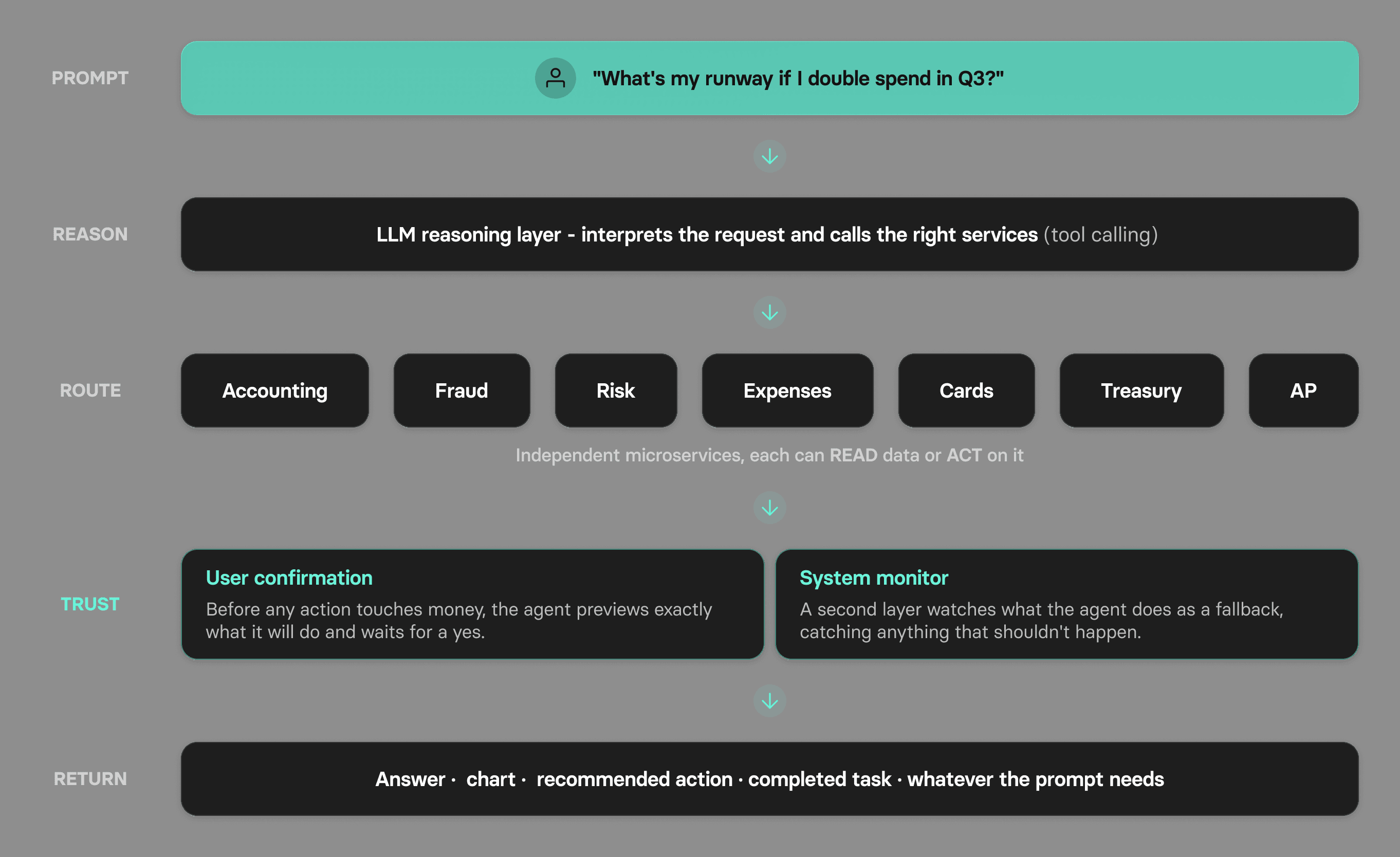
The architecture - simplified, not a screen. One prompt, multiple systems, two trust layers.
One prompt, the whole stack
One prompt reaches expenses, cards, treasury, fraud, risk, vendors and transactions through LLM tool calling and microservice routing. I designed and prototyped it end to end. Data engineering built the rails to move the data and connect the services.
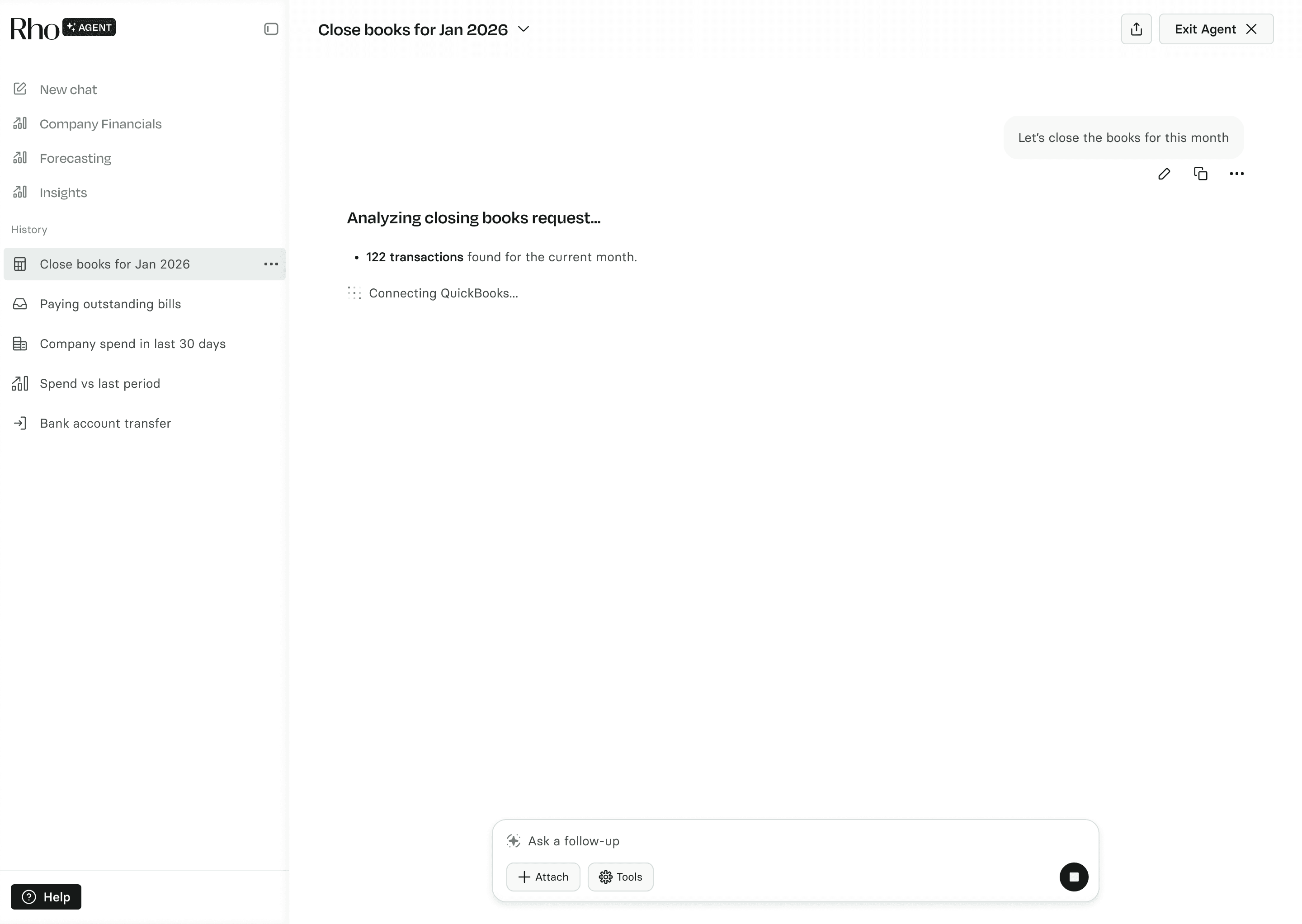
Trust before features
Two layers: the user confirms intent, and a system monitor catches what they miss. On a money product, trust is the product.

Architecture as the roadmap
In the age of AX, you do not make people click around for what they need. They state intent once and the system serves them across the whole stack. With no PM and no roadmap, that was the strategy. The architecture decided where Rho went next, and it triggered the company's AI homepage redesign
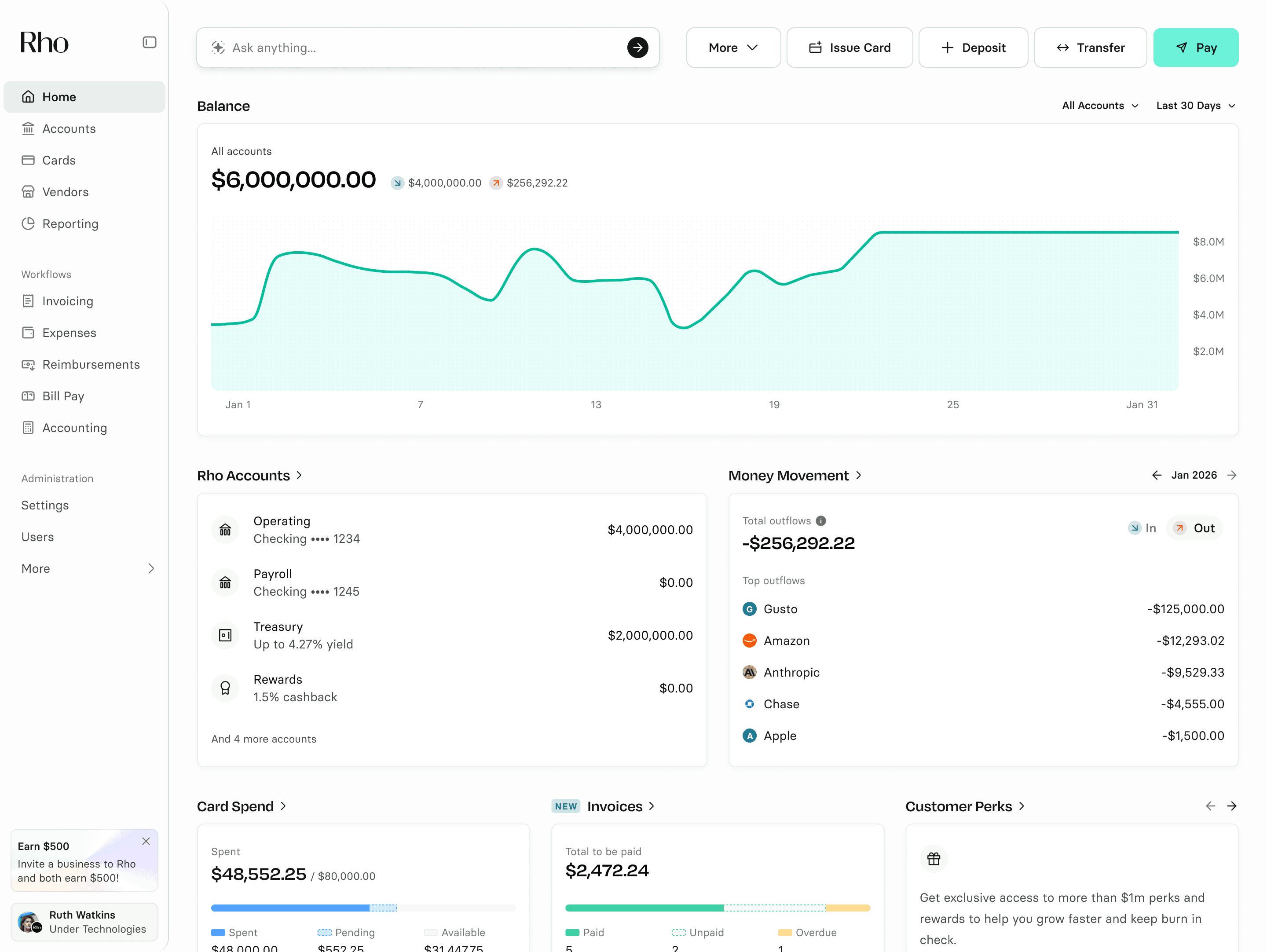
Everyone wanted a chatbot. A chatbot answers questions.
I built the thing that moves the money.
The controversial call.
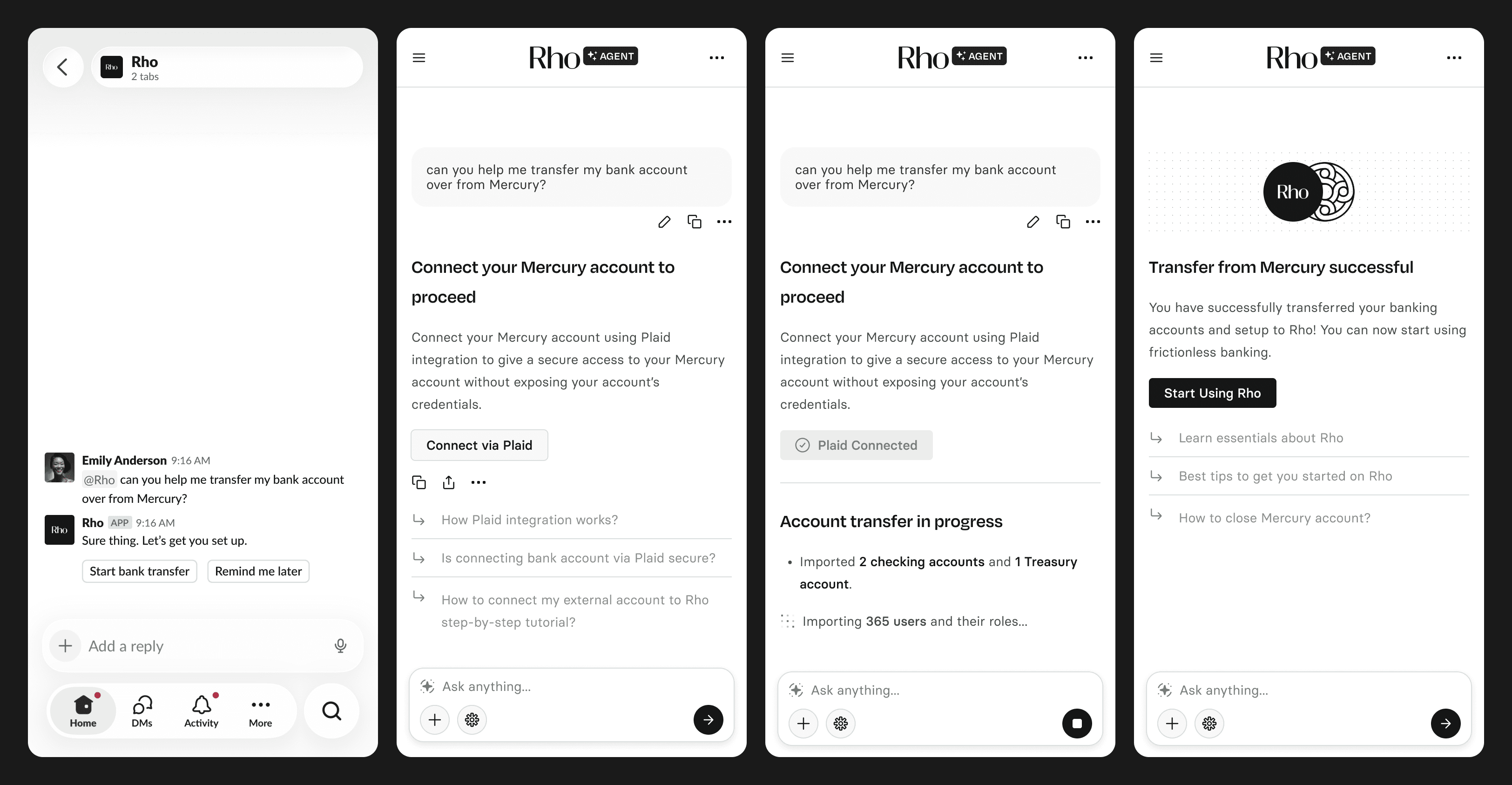
Switching banks, in one Slack message
Ask Rho to migrate data out of Mercury, in Slack, without opening the app. The agent picked it up, pulled the history, and mapped it across the money stack. No forms. No migration project. Without the need to open settings page.
Pushing designs to production.
The layer is in active development, built in Cursor, with the trust model intact. The architecture became the AI roadmap it was designed without.
What I took from it?
With no PM, the scope was the risk, not the technology. When there is no roadmap, the architecture is the strategy: decide how it works and you have decided where the company goes.
© 2026 · Thanks for scrolling, human